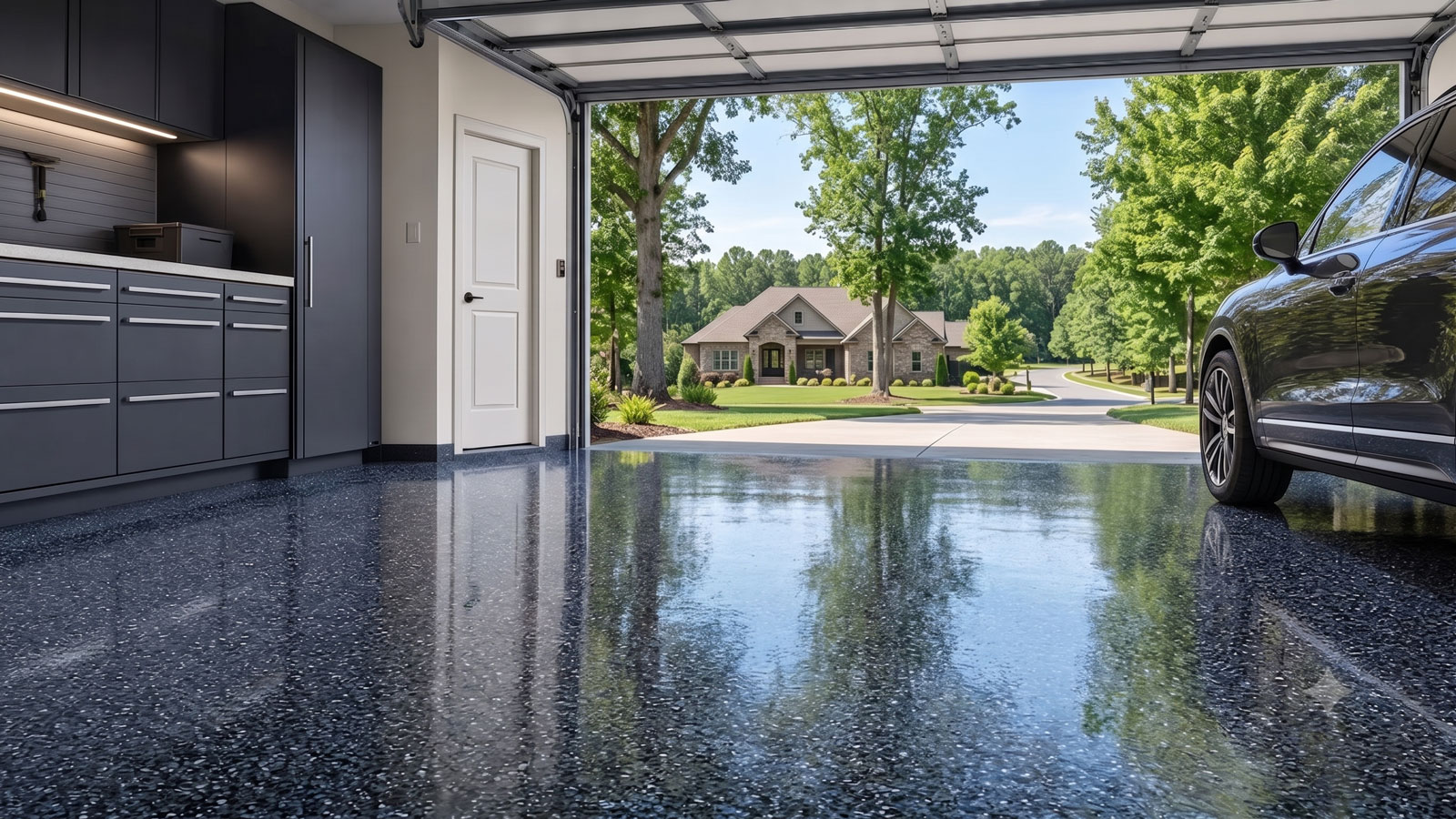
Garage Floor Coating in Menomonee Falls, WI
Floor Coating Services in Menomonee Falls, WI
Menomonee Falls incorporated as a village in 1892, but its garage landscape was transformed by twentieth-century subdivision growth. Hiawatha Heights became Wisconsin's first FHA-approved subdivision in 1937, and the 1950s brought 101 subdivisions with roughly 4,500 lots; a 1958 consolidation expanded the village from about 2 to 32 square miles. That huge mid-century subdivision wave means many garages have now accumulated decades of vehicle use, salt, repairs and earlier coatings even though they were once relatively uniform suburban concrete.
The Menomonee River and tributary systems cross a community whose suburban footprint grew rapidly across former rural land. That expansion added extensive streets, roofs, and driveways, making neighborhood drainage and detention as important as the river itself. Menomonee River drainage crosses infrastructure built in several eras, so runoff should be checked at the actual driveway and threshold rather than inferred from neighborhood age or river proximity.
Early village and prewar garages can have long coating or repair histories, while the massive postwar subdivision base includes mid-century concrete exposed to decades of salt and vehicle use. Later outer development adds younger slabs with construction treatments and larger multi-bay layouts.
Local Market Insight
Menomonee Falls has a particularly strong mid-century garage story: the 1937 Hiawatha Heights development and the huge 1950s subdivision wave created thousands of suburban lots, while the Menomonee River and tributary drainage cross infrastructure built over several generations.
What Affects the Cost of Garage Floor Coating in Menomonee Falls?
Menomonee Falls has a large mid-century garage base plus newer outer development. Established floors may need old coatings, repairs and salt-damaged areas addressed; younger slabs may need builder treatments removed. Menomonee River drainage, aging infrastructure, multi-bay layouts and winter use can further affect scope.
Local slab and development history
Menomonee Falls incorporated as a village in 1892, but its garage landscape was transformed by twentieth-century subdivision growth. Hiawatha Heights became Wisconsin's first FHA-approved subdivision in 1937, and the 1950s brought 101 subdivisions with roughly 4,500 lots; a 1958 consolidation expanded the village from about 2 to 32 square miles. The age and use of the garage can shift preparation from old coating and contamination removal to profiling younger concrete.
Waterways and lot drainage
The Menomonee River and tributary systems cross a community whose suburban footprint grew rapidly across former rural land. That expansion added extensive streets, roofs, and driveways, making neighborhood drainage and detention as important as the river itself. The project should respond to actual threshold water and lot grade rather than assume every nearby waterway causes slab moisture.
Old coatings, oil, and construction treatments
Older floors may carry paint, DIY epoxy, oil staining, or incompatible repairs; newer floors may carry curing compounds, sealers, and builder residue. Both require mechanical preparation matched to the surface.
Cracks, joints, and freeze-thaw wear
Stable cracks, control joints, pitting, chipped edges, repours, and patch compounds should be evaluated before grinding so weak material is not simply buried under a new finish.
Snowmelt and deicing residue
Decades of winter salt and meltwater can be especially relevant on the large mid-century garage stock, while newer floors still require proper profiling and treatment of sealers.
Garage use and layout
Detached shops, lake or outdoor equipment, multi-bay layouts, steps, cabinets, stored items, traction preferences, and vehicle return timing all affect labor and system choice.
Call for a clear, project-specific estimate — or request one online.
Menomonee Falls' 1937 and 1950s subdivision waves created a large mid-century garage base
The scale is unusually clear: more than one hundred subdivisions and thousands of lots were created during the 1950s growth period, while the village's territorial expansion changed it from a small center into a large suburban municipality.
The early village core, prewar subdivisions, the massive 1950s housing wave, and later outer development all produced different garage conditions. Mid-century slabs may now carry decades of paint, salt exposure, patching, and vehicle wear.
A Menomonee Falls estimate should distinguish old coatings and repairs from newer sealers, control joints, and builder treatments rather than assuming all suburban concrete needs the same preparation.
Menomonee River drainage intersects several generations of suburban infrastructure
The river provides a major regional drainage spine, but runoff reaches it through streets, swales, storm sewers, and tributaries that differ by development era. The garage inspection should therefore follow the actual lot and apron rather than use river proximity alone.
The Menomonee River, Lilly Creek, and other subwatersheds interact with neighborhoods built at different times. At a specific garage, inspect driveway pitch, detention or ditch flow, apron ponding, downspouts, and any actual water-entry history.
If runoff stays outside and the slab remains dry, the coating scope can stay focused on preparation and winter use. Repeated threshold water belongs in the drainage plan first. The city's different infrastructure eras also make property-level drainage important. A mid-century neighborhood and a newer subdivision can route stormwater differently, but the deciding evidence is still what happens at the garage door and on the slab after rain or thaw. Menomonee Falls homeowners should also look for the cumulative effect of decades of winter vehicle use. Salt, meltwater, repaired cracks and old coatings can overlap on mid-century floors. A strong estimate identifies which of those conditions actually require remediation and which are ordinary maintenance concerns after the new surface is installed. That distinction helps keep drainage and surface repair separate.
Before coating a Menomonee Falls garage
- Is the garage attached, detached, later-added, or part of a workshop or utility building?
- Is paint, DIY epoxy, clear sealer, curing compound, adhesive, or oil contamination present?
- Are cracks, pitting, salt-damaged edges, repairs, control joints, or multiple pours visible?
- Does rain or snowmelt run toward the garage from the driveway, ditches, swales, or downspouts?
- Are persistent damp areas, water marks, efflorescence, or old coating failures present?
- Where do salt, grit, wet tires, lake gear, or outdoor equipment normally collect?
- What traction level will still allow easy sweeping and mopping through winter?
Menomonee Falls Garage Floor Coating FAQs
Why is mid-century concrete so common in Menomonee Falls?
The village saw major subdivision growth in the 1930s and especially the 1950s, creating a large base of garages that have now seen decades of salt, vehicles, repairs, and coatings.
How can a 1950s Menomonee Falls garage differ from a newer outer-area garage?
A mid-century floor may have old paint, cracks, patches, and surface wear, while a newer slab is more likely to have curing compounds, sealers, control joints, and builder repairs.
Does Menomonee River drainage mean every garage needs moisture treatment?
No. River and subwatershed context are useful, but actual threshold water, dampness, mineral deposits, grading, or previous coating failure should drive the decision.
What should be checked before coating a salt-worn Menomonee Falls floor?
Inspect for scaling, pitting, weak edges, old repair material, and contamination so damaged concrete is repaired before the new system is installed.
Why can a mid-century Menomonee Falls garage need more preparation than its appearance suggests?
Decades of vehicle use can leave salt residue, repaired cracks, old coatings and patch compounds even when the slab still looks serviceable. Those layers and repairs need to be identified before mechanical preparation and coating.
Menomonee Falls Neighborhoods & Local Context
Phone Quote Line
Speak with a floor coating specialist about your project and get a realistic estimate range.
(262) 578-5558Typical Project Cost
$3,000–$5,500
Typical range for a two-car garage. Final pricing depends on floor size, concrete condition, prep work, coating type, and finish options.
Helpful Guides
Other Service Areas