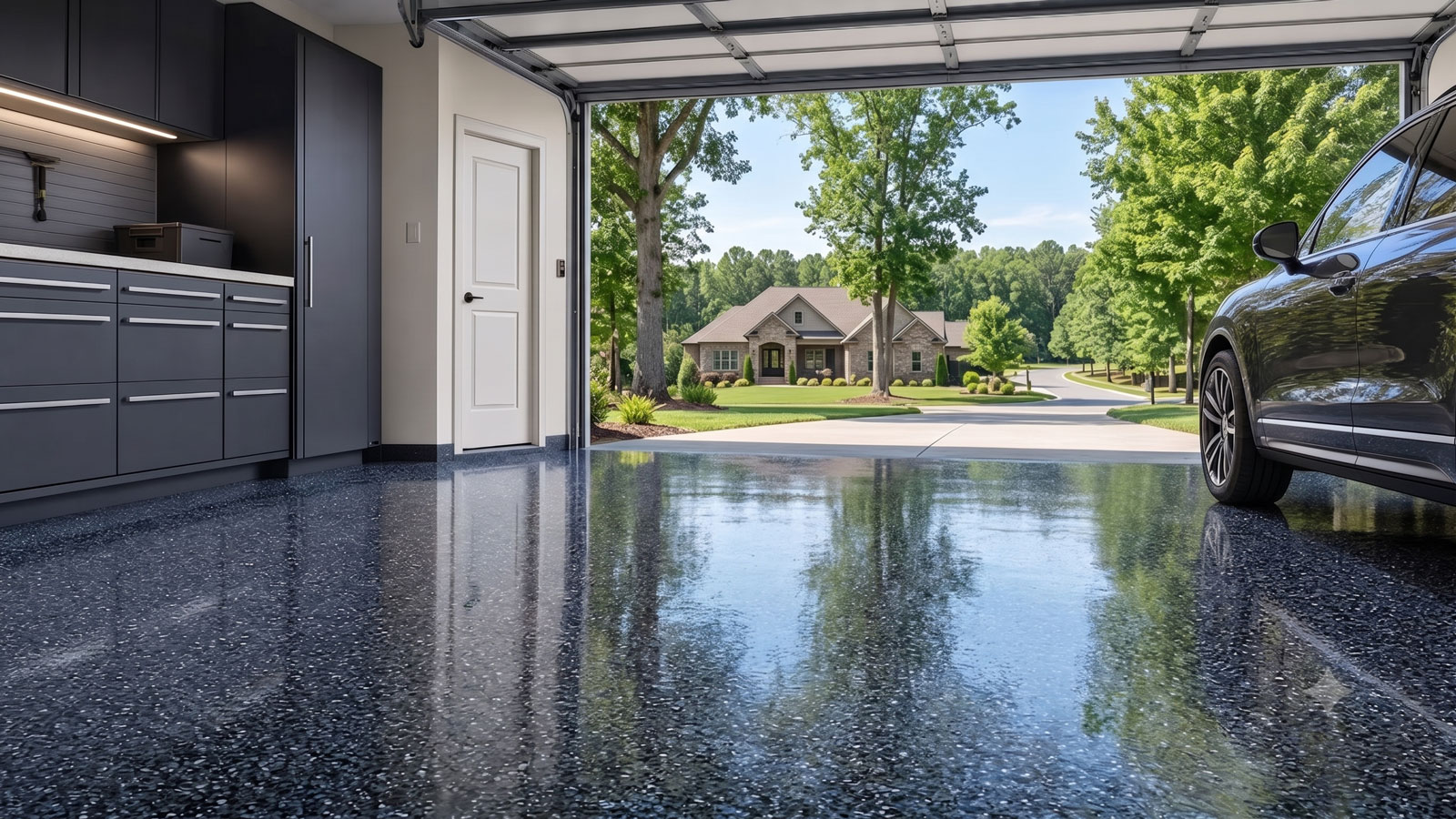
Garage Floor Coating in Muskego, WI
Floor Coating Services in Muskego, WI
Muskego became a town in 1838 and developed through farming, early immigrant settlement, lake resorts, and later Milwaukee suburban growth before incorporating as a city in 1964. Its service area still includes lake-oriented properties, former rural land, established neighborhoods, and newer subdivisions. That history creates a wide range of floor use, from boat or equipment storage and detached shops to conventional attached family garages. The resulting contamination, repair and access needs can vary as much as slab age.
Muskego's three-lake landscape, wetlands, channels, ditches, and mapped floodplains make stormwater a defining local system. City rules specifically evaluate pre- and post-development topography, drainage networks, lakes, streams, wetlands, and impervious surfaces when development changes runoff. The three-lake landscape makes drainage a central topic, but actual driveway runoff, ditch flow, threshold water and slab dampness are the evidence that should affect the project at a specific property.
Lake or rural-edge garages may be detached and used for boats, equipment, or workshop activity, while newer subdivisions bring attached family garages and more conventional storm-sewer drainage. Wet recreational gear and driveway runoff can matter independently from slab moisture.
Local Market Insight
Muskego's farm, lake-resort, and suburban eras create unusually varied garage uses, from detached equipment or boat spaces to newer family garages. Its three-lake landscape, wetlands, ditches, and watershed-scale stormwater planning make exterior drainage a core local inspection issue.
What Affects the Cost of Garage Floor Coating in Muskego?
Muskego's lake, former-rural and suburban properties create varied floor-use histories. Detached or recreational garages may have oil, equipment use and repairs; newer attached slabs may need builder treatments removed. Lakes, wetlands, ditches, driveway drainage and winter residue can add separate scope considerations.
Local slab and development history
Muskego became a town in 1838 and developed through farming, early immigrant settlement, lake resorts, and later Milwaukee suburban growth before incorporating as a city in 1964. Its service area still includes lake-oriented properties, former rural land, established neighborhoods, and newer subdivisions. The age and use of the garage can shift preparation from old coating and contamination removal to profiling younger concrete.
Waterways and lot drainage
Muskego's three-lake landscape, wetlands, channels, ditches, and mapped floodplains make stormwater a defining local system. City rules specifically evaluate pre- and post-development topography, drainage networks, lakes, streams, wetlands, and impervious surfaces when development changes runoff. The project should respond to actual threshold water and lot grade rather than assume every nearby waterway causes slab moisture.
Old coatings, oil, and construction treatments
Older floors may carry paint, DIY epoxy, oil staining, or incompatible repairs; newer floors may carry curing compounds, sealers, and builder residue. Both require mechanical preparation matched to the surface.
Cracks, joints, and freeze-thaw wear
Stable cracks, control joints, pitting, chipped edges, repours, and patch compounds should be evaluated before grinding so weak material is not simply buried under a new finish.
Snowmelt and deicing residue
Snow and road salt combine with wet lake gear, trailers, and outdoor equipment, making a practical traction/cleanability balance especially useful for many Muskego garages.
Garage use and layout
Detached shops, lake or outdoor equipment, multi-bay layouts, steps, cabinets, stored items, traction preferences, and vehicle return timing all affect labor and system choice.
Call for a clear, project-specific estimate — or request one online.
Muskego's farm, resort, and suburban eras created unusually varied garage uses
The community moved from a nineteenth-century farm settlement to a lake-resort destination and then a Milwaukee suburb. That history supports a wider range of detached shops, recreation storage, older slabs, and modern attached garages than a uniform subdivision market.
Lake-oriented and former-rural properties may have detached garages, boat or equipment use, multiple pours, or long repair histories. Newer subdivisions are more likely to have attached garages with builder treatments and conventional stormwater systems.
A Muskego estimate should account for that use history by checking old coatings, equipment contamination, trailer wear, repairs, sealers, control joints, and any floor transitions before coating.
Lakes, wetlands, and watershed-scale stormwater planning make drainage central to Muskego
Muskego's stormwater rules explicitly consider lakes, streams, wetlands, ditches, floodplains, topography, and impervious surfaces. At the individual garage, the practical evidence remains driveway flow, low spots, wet slab edges, and known water entry.
Muskego's lakes, wetlands, channels, ditches, and mapped floodplains are all part of the city's stormwater framework. At the garage, inspect driveway grade, ditch flow, basin or wetland edges, downspouts, and whether runoff actually reaches the door.
Wet recreational gear or snowmelt carried inside is a use condition; recurring exterior water crossing the threshold is a drainage problem. Those two situations should not be treated the same way. Muskego homeowners should distinguish wet recreational use from actual slab moisture and distinguish watershed context from property-level runoff. A lake-area garage can be dry but heavily used, while a suburban floor can still have threshold-water problems because of grading. Muskego's lake and former-rural properties can likewise have access and use conditions that differ from a conventional subdivision garage. Boat storage, equipment, wet gear, detached buildings and longer drives can all affect preparation or finish priorities. Those factors should be documented separately from any actual drainage or slab-moisture evidence. That makes lake use, workshop use and active water entry distinct scope items rather than one generalized moisture concern.
Before coating a Muskego garage
- Is the garage attached, detached, later-added, or part of a workshop or utility building?
- Is paint, DIY epoxy, clear sealer, curing compound, adhesive, or oil contamination present?
- Are cracks, pitting, salt-damaged edges, repairs, control joints, or multiple pours visible?
- Does rain or snowmelt run toward the garage from the driveway, ditches, swales, or downspouts?
- Are persistent damp areas, water marks, efflorescence, or old coating failures present?
- Where do salt, grit, wet tires, lake gear, or outdoor equipment normally collect?
- What traction level will still allow easy sweeping and mopping through winter?
Muskego Garage Floor Coating FAQs
How can a lake-oriented Muskego garage differ from a newer subdivision garage?
Lake or rural-edge properties may have detached garages, boats, trailers, equipment, mixed pours, or heavier contamination. Newer garages more often have attached slabs, builder surface treatments, and modern drainage.
Why are lakes, wetlands, and ditches relevant to a Muskego garage project?
They shape how runoff moves across the property. Driveway grade, swales, ditches, basin outlets, and threshold water should be checked before assuming the slab has a moisture problem.
What should be checked in a garage used for boats or trailers?
Look for water patterns, oil or fuel contamination, tire or trailer wear, storage constraints, traction needs, and any damage at door edges or transitions.
Does being near Big Muskego Lake or another local water body automatically require special coating chemistry?
No. The system should follow the actual slab condition, water history, preparation needs, and use—not proximity alone.
Why can a Muskego boat or equipment garage need a different coating approach from a family garage?
Recreational or utility use can bring more wet gear, oil, equipment traffic and traction needs. Those conditions should be considered along with contamination and repair history when the floor is prepared and the finish is selected.
Muskego Neighborhoods & Local Context
Phone Quote Line
Speak with a floor coating specialist about your project and get a realistic estimate range.
(262) 578-5558Typical Project Cost
$3,000–$5,500
Typical range for a two-car garage. Final pricing depends on floor size, concrete condition, prep work, coating type, and finish options.
Helpful Guides
Other Service Areas