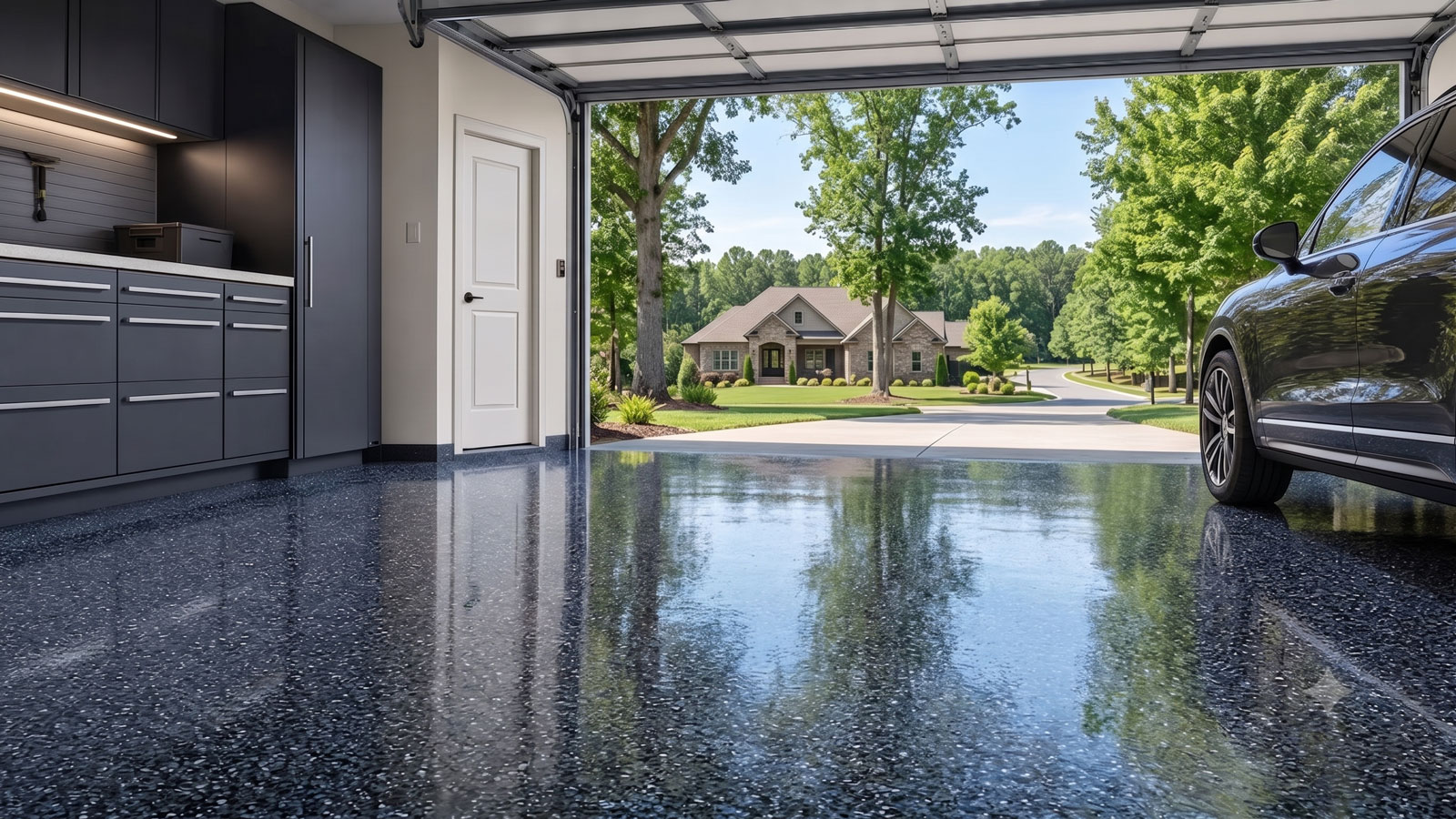
Garage Floor Coating in Waukesha, WI
Floor Coating Services in Waukesha, WI
Waukesha began as Prairieville, incorporated as a village in 1846, changed its name the following year, and became a city in 1896. Early development followed the Fox River and a compact street grid, while post-1940 growth shifted outward and the city's population more than doubled through the later twentieth century. That history means a garage near the older grid may have been added, repoured or repeatedly patched long after the house was built, while later subdivisions are more likely to begin with younger attached concrete and builder treatments.
The Fox River runs through Waukesha, and the city continues flood-mitigation work that includes rehabilitation of stormwater ponds, pipes, embankments, and drainage easements. Older urban drainage and newer suburban detention therefore coexist within one service area. Fox River and stormwater work provide useful local context, but actual threshold water, driveway grade and slow-drying slab areas are what should change the coating scope.
A historic or early-grid garage may have paint, patches, additions, and old contamination, while later subdivisions can have younger attached slabs with curing compounds, builder patching, control joints, and modern stormwater grading.
Local Market Insight
Waukesha combines an older Fox River-centered urban core with major postwar outward growth, so garage concrete can range from patched historic-area slabs to younger subdivision floors. Active stormwater and flood-mitigation work along the Fox River makes actual drainage history especially relevant.
What Affects the Cost of Garage Floor Coating in Waukesha?
Waukesha's older Fox River core and postwar outward growth create several slab generations. Established garages may need paint, repairs or mixed pours addressed; newer floors may need builder treatments removed. Fox River drainage, winter contamination, lot grading and garage layout can add separate project variables.
Local slab and development history
Waukesha began as Prairieville, incorporated as a village in 1846, changed its name the following year, and became a city in 1896. Early development followed the Fox River and a compact street grid, while post-1940 growth shifted outward and the city's population more than doubled through the later twentieth century. The age and use of the garage can shift preparation from old coating and contamination removal to profiling younger concrete.
Waterways and lot drainage
The Fox River runs through Waukesha, and the city continues flood-mitigation work that includes rehabilitation of stormwater ponds, pipes, embankments, and drainage easements. Older urban drainage and newer suburban detention therefore coexist within one service area. The project should respond to actual threshold water and lot grade rather than assume every nearby waterway causes slab moisture.
Old coatings, oil, and construction treatments
Older floors may carry paint, DIY epoxy, oil staining, or incompatible repairs; newer floors may carry curing compounds, sealers, and builder residue. Both require mechanical preparation matched to the surface.
Cracks, joints, and freeze-thaw wear
Stable cracks, control joints, pitting, chipped edges, repours, and patch compounds should be evaluated before grinding so weak material is not simply buried under a new finish.
Snowmelt and deicing residue
Winter snowmelt and deicers can remain on the floor for hours, while spring thaw and storms reveal whether exterior water management is functioning properly.
Garage use and layout
Detached shops, lake or outdoor equipment, multi-bay layouts, steps, cabinets, stored items, traction preferences, and vehicle return timing all affect labor and system choice.
Call for a clear, project-specific estimate — or request one online.
Waukesha's Fox River core and postwar outward growth created distinct concrete eras
Development before 1940 remained relatively compact around the historic core; after 1970 much of the city's growth occurred farther from downtown. That shift helps explain why garage age and construction pattern can change markedly across Waukesha.
Near the older street grid and historic core, garages may have been added, repoured, painted, or repaired over many decades. Later subdivisions are more likely to have attached garages with younger slabs and builder surface treatments.
A Waukesha estimate should separate those conditions by identifying old coatings, concrete transitions, patches, curing products, and control joints before deciding on the preparation plan.
Fox River drainage and active pond rehabilitation make stormwater a current local issue
Waukesha continues to maintain and rehabilitate stormwater ponds and conveyance systems as part of flood mitigation. For a homeowner, the relevant evidence is still close to the garage: lot grade, inlet condition, apron ponding, and known water entry.
The Fox River and the city's stormwater system create known flood and ponding concerns in some areas, but the garage-level question remains local: does water collect at the apron, cross the threshold, linger at slab edges, or correlate with past coating failure?
If the garage remains dry during heavy rain, the work can stay focused on preparation and finish. Known threshold water or recurring ponding should be addressed separately from the coating. In Waukesha, the useful comparison is between the actual concrete history and the property's actual drainage behavior. Active stormwater projects explain why runoff deserves attention, but they do not replace direct inspection of the garage floor and threshold. Waukesha's older core and newer growth also differ in access and layout. A compact established garage can require more repair and coating removal, while a larger suburban floor may add joints, stem walls and edge work. The estimate should make those differences visible instead of reducing the project to floor area. This keeps the scope tied to evidence at the property.
Before coating a Waukesha garage
- Is the garage attached, detached, later-added, or part of a workshop or utility building?
- Is paint, DIY epoxy, clear sealer, curing compound, adhesive, or oil contamination present?
- Are cracks, pitting, salt-damaged edges, repairs, control joints, or multiple pours visible?
- Does rain or snowmelt run toward the garage from the driveway, ditches, swales, or downspouts?
- Are persistent damp areas, water marks, efflorescence, or old coating failures present?
- Where do salt, grit, wet tires, lake gear, or outdoor equipment normally collect?
- What traction level will still allow easy sweeping and mopping through winter?
Waukesha Garage Floor Coating FAQs
How do garages near Waukesha's older Fox River core differ from later subdivisions?
Older-area garages may have paint, patches, additions, repours, or long contamination histories. Later subdivision floors are more likely to have curing compounds, sealers, control joints, and builder repairs.
Does Fox River flood history mean every Waukesha garage has a moisture problem?
No. The useful evidence is property-specific: actual water entry, persistent dampness, efflorescence, poor grading, or a previous coating failure.
What should be checked after a heavy Waukesha rain?
Look at the driveway, apron, low spots, downspout discharge, and threshold. That reveals whether stormwater reaches the garage or simply stays outside.
Can an older Waukesha slab still be a good coating candidate?
Yes. Sound older concrete can perform well when incompatible coatings, weak patches, contamination, and damaged areas are properly removed or repaired.
How can an older Waukesha home have a garage floor from a much later construction era?
Garages are often added or repoured after the house was built. Changes in concrete color, joint lines, patches and old coating edges can reveal those later phases and help determine where different preparation or repair is needed.
Waukesha Neighborhoods & Local Context
Phone Quote Line
Speak with a floor coating specialist about your project and get a realistic estimate range.
(262) 578-5558Typical Project Cost
$3,000–$5,500
Typical range for a two-car garage. Final pricing depends on floor size, concrete condition, prep work, coating type, and finish options.
Helpful Guides
Other Service Areas